

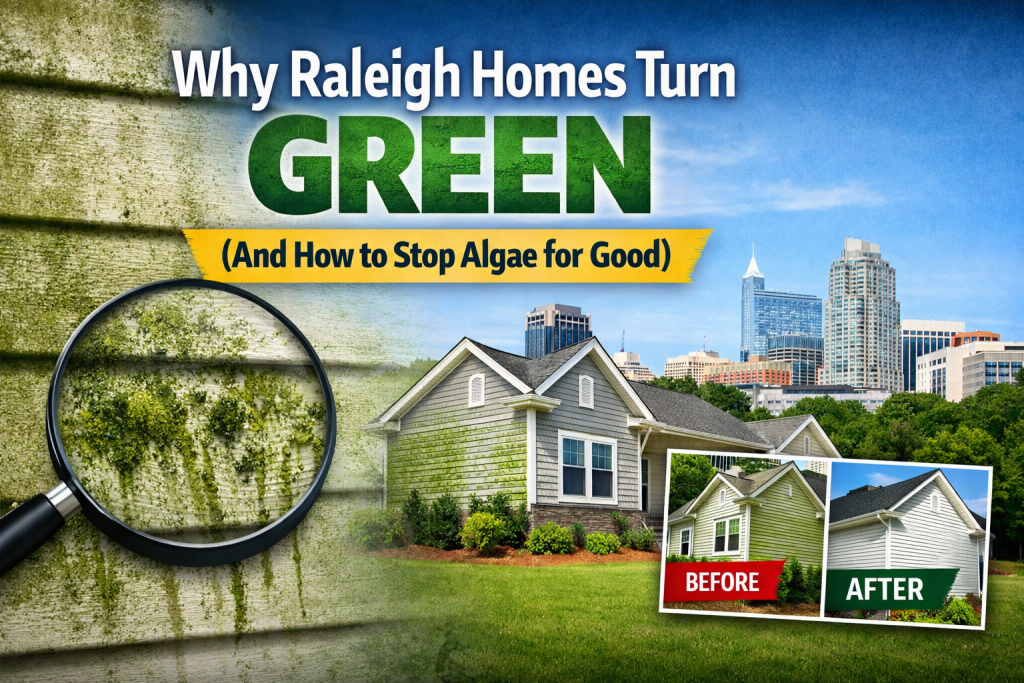
Why Raleigh Homes Turn Green (And How to Stop Algae for Good)
If you’ve lived in Raleigh for more than a year, you’ve probably noticed it.
That green film slowly creeping across your siding.
Dark streaks forming on the north side of your home.
Driveways that look permanently stained.
You clean it… and somehow it comes back.
So what’s really going on?
The truth is, Raleigh’s climate creates the perfect storm for algae growth. And if you don’t treat it properly, it will keep returning year after year.
In this guide, we’ll break down:
-
Why homes in Raleigh turn green
-
What that green stuff actually is
-
Why pressure washing alone doesn’t fix it
-
The safest and most effective way to remove it
-
How to keep it from coming back
Let’s dive in.
What Is the Green Stuff on My House?
Most homeowners assume it’s dirt.
It’s not.
That green buildup is typically algae, specifically a strain called Gloeocapsa magma. It thrives in humid environments and feeds on the limestone filler found in many siding materials and shingles.
In Raleigh, it spreads fast because:
-
High humidity levels
-
Frequent rainfall
-
Long pollen seasons
-
Shaded tree coverage in many neighborhoods
And once it takes hold, it doesn’t go away on its own.
Why Raleigh Homes Are Especially Prone to Algae
The climate in Raleigh plays a huge role.
1. High Humidity
Raleigh summers are warm and humid. Moisture lingers on siding and roofs — especially on the north-facing side of homes that don’t get direct sunlight.
Algae love moisture. The longer surfaces stay damp, the faster colonies grow.
2. Heavy Tree Coverage
Many Raleigh neighborhoods — especially established communities — have mature trees that create shade and drop organic debris onto homes.
Shaded areas dry slowly. That moisture becomes a breeding ground.
3. Pollen Season
If you’ve ever seen your car turn yellow in spring, you know Raleigh’s pollen season is intense.
That pollen doesn’t just coat cars. It sticks to siding and provides nutrients that help algae grow even faster.
4. Mild Winters
Unlike colder northern climates, Raleigh doesn’t experience long freezes that kill off algae growth. That means it can survive year-round.
Why It Keeps Coming Back
Here’s the mistake many homeowners make:
They rent a pressure washer.
They blast the siding.
It looks clean.
But within months — it’s back.
Why?
Because pressure washing alone removes the surface stain, but it doesn’t kill the root system of the algae.
It’s like mowing weeds without pulling them out.
The spores remain embedded in the pores of your siding. When moisture returns, the growth resumes.
The Problem With High-Pressure Washing
High-pressure cleaning can actually make things worse if done incorrectly.
Here’s why:
-
It can force water behind siding
-
It can damage vinyl and loosen panels
-
It can etch concrete
-
It can strip paint
-
It does not eliminate organic growth at the root
Many homeowners don’t realize that most professional companies today use soft washing for siding instead of high pressure.
What Is Soft Washing (And Why It Works Better)?
Soft washing is a low-pressure cleaning method that uses professional-grade cleaning solutions to kill algae, mold, and mildew at the source.
Instead of blasting the surface, it:
-
Applies a cleaning solution
-
Breaks down organic growth
-
Kills spores
-
Gently rinses away residue
The key difference?
It treats the cause — not just the symptom.
When done correctly, results can last 12–24 months depending on sun exposure and tree coverage.
Is Algae Just a Cosmetic Problem?
Many people assume green siding is just an eyesore.
It’s more than that.
Over time, algae and mold can:
-
Break down siding materials
-
Cause premature aging
-
Lead to staining that becomes permanent
-
Contribute to moisture retention
-
Create slip hazards on driveways and walkways
On roofs, algae can shorten shingle lifespan significantly.
If you plan to sell your home in Raleigh, exterior staining can also reduce curb appeal instantly.
First impressions matter — especially in competitive real estate markets.
Which Areas of Your Home Are Most Vulnerable?
In Raleigh, algae commonly shows up on:
-
North-facing siding
-
Areas under trees
-
Gutters and fascia
-
Concrete driveways
-
Brick exteriors
-
Fences
-
Decks
-
Roof shingles
Concrete is especially prone because it’s porous. Once algae embed into the surface, it spreads quickly.
How Often Should Raleigh Homes Be Washed?
For most homes in Raleigh:
-
Once per year is ideal
-
Heavily shaded homes may need cleaning every 8–10 months
-
Homes in full sun may last up to 18 months
The goal is prevention — not waiting until staining is severe.
Regular maintenance prevents buildup from becoming deeply embedded.
Why DIY Solutions Often Fail
Many homeowners try:
-
Store-bought cleaners
-
Household bleach
-
Vinegar
-
Rental pressure washers
While these may temporarily improve appearance, they usually fail long-term because:
-
Solutions are too diluted
-
Dwell time isn’t long enough
-
Equipment isn’t strong enough
-
Growth isn’t fully neutralized
Professional equipment and commercial-grade cleaning solutions are calibrated specifically for exterior surfaces.
There’s also risk involved.
Improper use of ladders or pressure washers can cause serious injury. Water intrusion behind siding can cause hidden structural damage.
The Cost of Ignoring It
Algae may start as a small green patch — but it spreads.
Over time, ignoring it can lead to:
-
Repainting sooner than necessary
-
Replacing siding prematurely
-
Roof repairs
-
HOA notices
-
Decreased property value
Routine exterior cleaning is far less expensive than repairs.
The Best Time to Remove Algae in Raleigh
Spring and early summer are the most popular times because:
-
Pollen season has ended
-
Weather is warm enough for proper treatment
-
Homes dry quickly
However, algae removal can be performed nearly year-round in Raleigh thanks to mild winters.
Fall is another great option — especially before moisture-heavy winter months.
What to Expect From a Professional Cleaning
When done correctly, you should notice:
-
Even color restoration
-
No streaking
-
No damage to siding
-
No water intrusion
-
A visibly brighter home
Your house should look refreshed — not stripped or scarred.
Professionals will also protect landscaping and surrounding surfaces during treatment.
How to Keep It From Coming Back
While you can’t eliminate Raleigh’s humidity, you can slow algae growth by:
-
Trimming back overhanging branches
-
Improving drainage around your foundation
-
Cleaning gutters regularly
-
Scheduling routine maintenance washings
Prevention is always cheaper than restoration.
The Bottom Line
Homes in Raleigh turn green because the climate makes it almost unavoidable.
Humidity. Shade. Pollen. Rain.
It’s the perfect environment for algae to thrive.
But the solution isn’t blasting your siding with high pressure. It’s using the right process — one that kills organic growth at the source and keeps it from returning quickly.
If your home is starting to show green streaks, dark patches, or stained concrete, addressing it early will save you money and preserve your home’s value.
Ready to Restore Your Home’s Exterior?
If you’re seeing algae buildup on your siding, driveway, or roof, don’t wait until it spreads further.
Professional soft washing can safely restore your home’s appearance and help protect it long-term.
Request a free quote today and keep your Raleigh home looking clean, bright, and protected all year long.